
BISP Scam Alert Pakistan 2026 – Fake Calls, SMS & SIM Fraud
BISP and Ehsaas frauds are becoming a big problem for the financially aided people. Miscreants are using fake calls, SMS, WhatsApp, and websites to lure citizens and scare them about their BISP payment. Various fraudulent approaches involve the blocking of payment, CNIC verification, and extra financial aid allocation through which miscreants trick poor and vulnerable citizens.
Mostly such scams aim at stealing CNIC, OTP, PIN, password, and money of the targeted person. If someone asks for sensitive information about your BISP payment through a call, do not share that information and cut the conversation immediately. Verify such information officially through BISP channels.
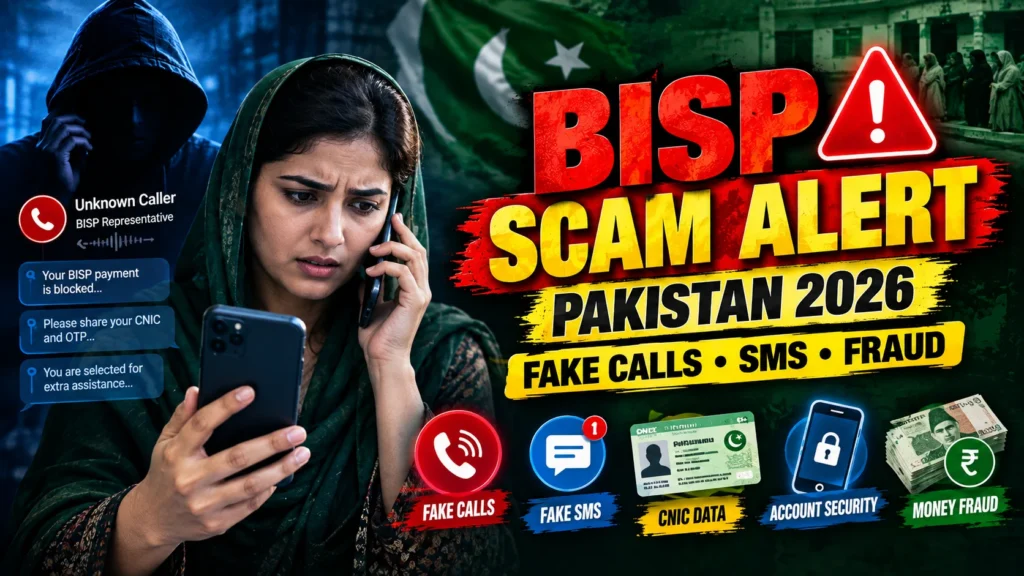
BISP Scam Alert: How Fake Calls Work
A scam call may sound convincing. The caller can introduce themselves as a BISP representative and speak confidently about your payment or registration.
Some common claims include:
- Your BISP payment has been stopped.
- Your CNIC requires urgent verification.
- Your payment is ready for collection.
- You have been selected for extra financial assistance.
- Your mobile SIM needs to be updated.
- You need to pay a small fee before receiving your payment.
- An OTP is required to finish the procedure.
The scammer may try to gain your trust first and ask for a security code sent to your phone. Do not read out the OTP to the caller or send them via WhatsApp or SMS. You must also keep your Easypaisa PIN, JazzCash PIN, bank password, card PIN, other security codes and passwords private. In case of doubt, hang up the phone and check the information yourself at an official channel.
Be Careful With Fake 8171 SMS
8171 is the official number for SMS services related to BISP – but scammers can also use the numbers 8171 to send fake messages. A fake message could be about your approval or disapproval of a payment – or about problems with your CNIC verification – and then urge you to go to a link. Just because the message has the words BISP, Ehsaas or 8171, this does not mean it is genuine. If you want to check your payment or registration details, make sure to do this via an official BISP channel. Avoid using links provided by unknown numbers.
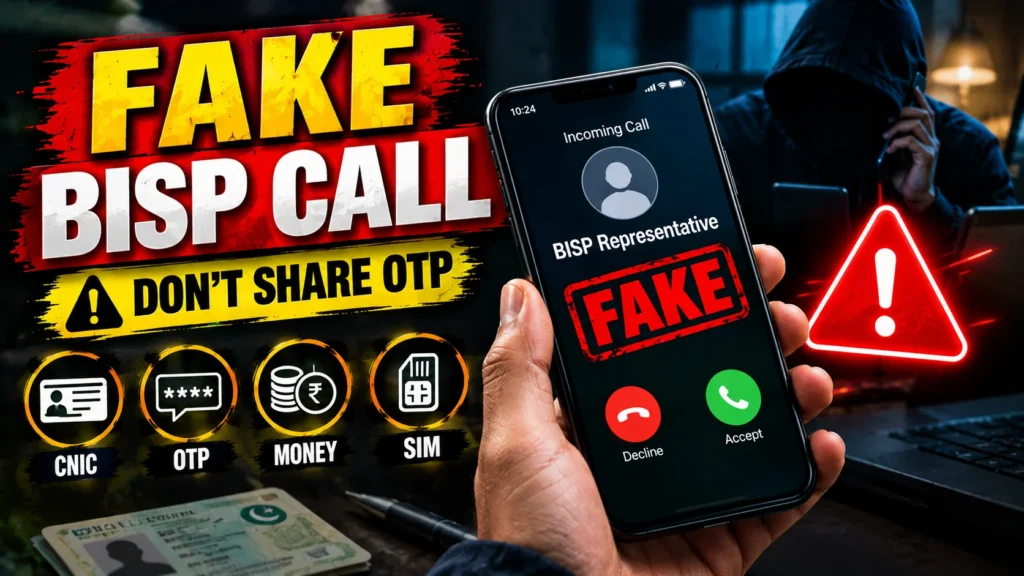
Fake BISP and 8171 Websites
Search results for BISP and 8171 can include many websites offering payment checks, registration information, or assistance. A website is not automatically official simply because it contains BISP, Ehsaas, or 8171 in its name.
A suspicious website may ask for:
- CNIC number
- Mobile number
- CNIC photograph
- OTP
- Easypaisa or JazzCash PIN
- Bank password
- Card details or security information
Do not enter sensitive information on a website you do not recognize. When checking BISP information online, type or find the official service yourself instead of opening an unknown link sent through SMS, WhatsApp, or social media.
What Information Should You Never Share?
| Information | Safe Action |
| CNIC number | Avoid giving it to an unknown caller |
| CNIC photo | Do not send it to a suspicious person |
| OTP | Never share it |
| Easypaisa PIN | Keep it private |
| JazzCash PIN | Keep it private |
| Bank password | Never disclose it |
| Card PIN | Never give it to anyone |
| Payment-release fee | Do not pay an unknown person |
Remember: knowing your CNIC number does not prove that someone works for BISP.
Can a BISP Scam Affect Your SIM?
Your mobile number may be connected to important services such as banking, Easypaisa, JazzCash, and other accounts. These services can send OTPs and security alerts to your SIM. That is why you should pay attention if your SIM suddenly stops working after a suspicious call or interaction. Contact your mobile network operator through its official customer service and ask them to check your SIM and mobile number.
However, a sudden loss of network service does not automatically mean that someone has taken control of your SIM. Network problems, technical issues, or other causes can also interrupt service. Still, unusual SIM problems after a suspicious conversation should not be ignored.
I Gave My CNIC to a Fake BISP Caller
If you have already shared your CNIC with a suspicious caller, do not panic. The most important thing is to stop sharing additional information. Save the caller’s number and take screenshots of any SMS, WhatsApp conversation, or website they sent you. Then monitor your accounts and mobile number for unusual activity.
Pay attention to:
- Unexpected OTP messages
- Unknown calls
- Unusual account alerts
- Password-reset messages you did not request
- Unexpected banking or wallet transactions
If you notice suspicious activity, contact the relevant bank, wallet provider, mobile operator, or other service directly through its official contact details. Sharing your CNIC alone does not automatically give a scammer access to your bank account or SIM. However, scammers may try to use it to gain your trust and obtain more information.
I Shared an OTP With a Scammer – What Should I Do?
If you have shared an OTP, contact the service connected to that OTP as soon as possible. For example, if the code was related to a bank, Easypaisa, JazzCash, or another financial service, contact that provider and explain what happened.
You should also:
- Check your recent transactions.
- Review account security alerts.
- Contact the service’s official support team.
- Change your PIN or password if recommended.
- Do not share another OTP if they contact you again.
This will help reduce the risk of other fraudulent activities.
What If I Sent Money to a Fake BISP Agent?
If you send money to someone claiming to be a BISP representative, contact the bank or wallet service you used immediately.
Keep the following information:
- Transaction ID
- Amount sent
- Receiver’s number or account
- Date and time
- Confirmation SMS
- Screenshots
- Relevant messages or chat history
Do not send another payment because the scammer claims that they need an additional fee to return your money.
Does BISP Charge a Registration or Payment Fee?
Be careful if someone asks you to pay money for BISP registration, verification, or payment release.
A scammer may describe the payment as a:
- Registration fee
- Verification fee
- Processing charge
- File fee
- Payment-release fee
Do not pay an unknown person simply because they claim to be a BISP agent. If you are told that a payment is blocked or that you must pay before receiving assistance, verify the claim through an official BISP channel first.
How to Report a Fake BISP Call or SMS
Save the evidence before blocking the suspicious number.
Keep the:
- Phone number
- SMS messages
- WhatsApp chats
- Screenshots
- Website address
- Transaction information
- Payment confirmation
Depending on the case nature, one should contact BISP, mobile network operator, one’s bank or wallet provider, or appropriate cybercrime authorities. When contacting them, it is essential to provide the information one saved about the incident; that way, the case details will be clearer for the investigators.
How to Protect Yourself From BISP Scams
One can significantly minimize BISP scam risks by remembering several essential rules.
- Firstly, never disclose the OTP (one-time-password) to anyone.
- Secondly, never share one’s PINs and passwords. Lastly, do not click on any suspicious links, especially payment-related ones.
- Do not open suspicious payment links.
- Do not send your CNIC photo to unknown people.
- Never pay an unknown person to release a BISP payment.
- Do not trust a website just because it uses “8171” in its name.
- Verify payment information through official BISP channels.
- Contact your mobile operator if your SIM suddenly stops working.
- Save evidence before blocking a suspected scammer.
- Contact your bank or wallet provider quickly if money or account security is involved.
Related SIM Information
Your mobile number can be connected to different financial and communication services, so keeping track of SIM registration can also be useful. If you want to check SIM-related information in Pakistan, you can use our SIM Information service to find relevant information about SIM registration and ownership.
Final Thoughts
It is easy to fall for such BISP and Ehsaas scams as fraudsters use most common names, payment claims and other traps to lure their prey. Never give your CNIC, OTP, PIN, password or any other financial details to an unknown caller. Moreover, do not pay to any one claiming to release, verify or re-fix your BISP payment. In case if you get any suspicious call, SMS, WhatsApp message or link via website, first of all, double-check the details by contacting the official source.
In case you have already shared someone’s OTP or have already transferred money, contact the concerned bank, wallet service or any other official support system. If your SIM is acting abnormal due to some suspicious activity, you should also contact your mobile company and ask them to investigate the issue. It is always better to waste a couple of minutes and save your life, money and other personal assets.
FAQs
Is 8171 the official BISP SMS number?
8171 is the official BISP SMS line, so be careful of SMS coming from other numbers as they may be trying to scam you over the phone.
Can a BISP representative ask for my OTP?
You should never share your OTP with a caller or unknown person. Keep all security codes private.
Is every 8171 website official?
No, the mere fact that a website has ‘8171’, ‘BISP’ or ‘Ehsaas’ in its name does not make it official.
What should I do if my SIM suddenly stops working?
You need to contact your cellular network provider through its official customer care executive and confirm whether your SIM and phone number is legitimate or not.
Are BISP WhatsApp messages genuine?
Not necessarily, in fact you should be wary of such WhatsApp contacts and not share your CNIC, OTP, PIN or Password in response to any request or link.
Does BISP require money to release a payment?
Be suspicious of anyone who asks for a private fee to release or process your BISP payment. Verify the claim through BISP before paying.